The productivity of software development teams has increased by over 200% globally this year. In certain cases, teams have even shown productivity boosts of over 350%, mostly owing to outsourced project work coming to teams from over the world.
Outsourcing is not an unfamiliar word in the IT industry. In fact, the IT industry is the frontrunner when it comes to outsourcing, with over 50% of the market share. Experts say that in the coming years, IT outsourcing industry will grow at a 5% rate per year and reach nearly $500 billion in market value.
What does this mean for your business? If your enterprise is experiencing a talent gap, you need to re-evaluate how you search for talent in the market. What are the readily available solutions you can use to your advantage and help your business achieve goals without burning a hole in your pocket?
A smart outsourcing model like a dedicated software development team is worth a shot. It allows you to hire professionals from around the world and with a dedicated development teams, you get a hire on your team cross-functional professionals who make achieving your goals even easier.
Through dedicated teams, you can build a well-rounded team of remote talent and collaborate on software development projects. While it all may sound simple, it takes considerable effort and planning to get this arrangement going like a well-oiled machine!
If you haven’t really thought about it, here is what we have to get you started on how to maneuver through the arrangement, and your step-by-step guide for setting up a successful dedicated development team for your business.
You are hire a team of software developers from a vendor that is supervised by the outsourcing agency. But how can you evaluate how good the hired dedicated development team is?
Following were the other cloud security challenges businesses faced:
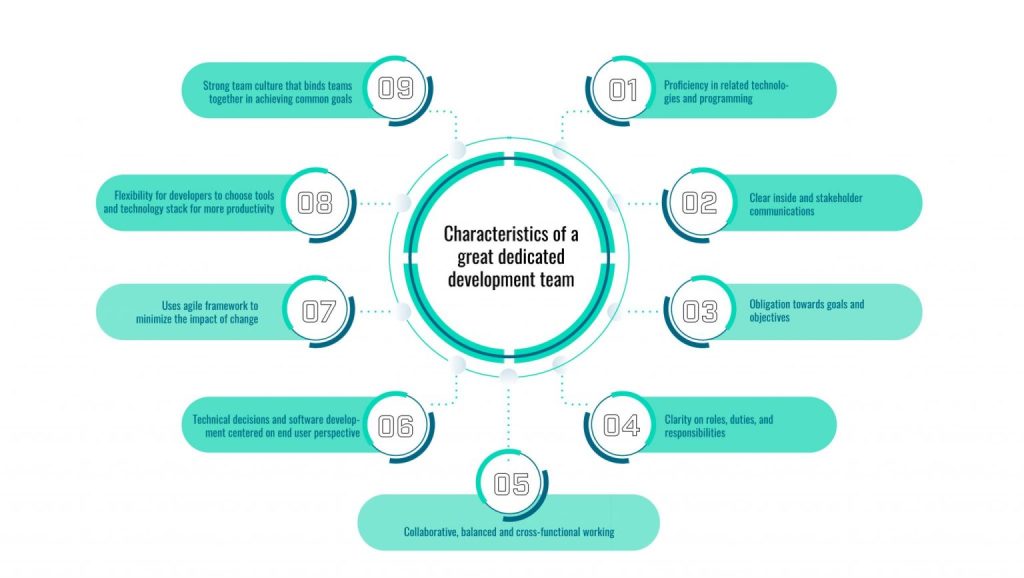
Also, several factors that help you identify the proficiency of your dedicated development team. A few of the characteristics great dedicated teams would possess are as follows:
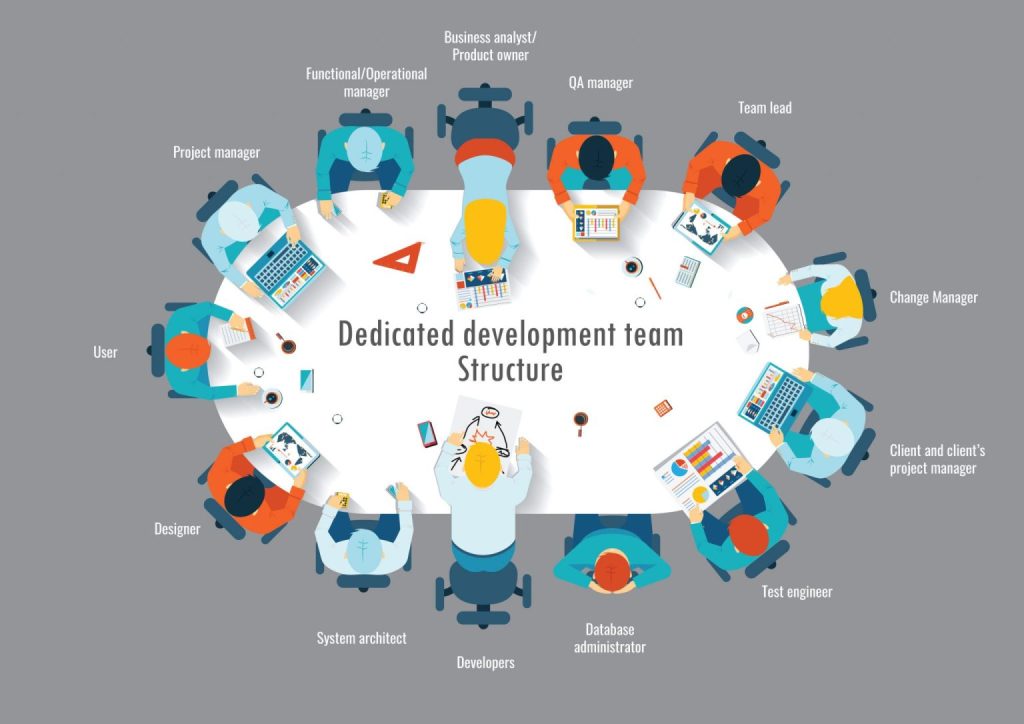
Software development projects have their distinctiveness, and the structure of the team will vary according to the complexity of the project. The roles and responsibilities of the dedicated development team will vary according to different projects. The most generically accepted structure is explained below:
The project manager role is the most vital in a dedicated team. The project manager has to ensure that the requirements and performance of the team are met. The responsibilities include leading, project planning, recruiting, meeting deadlines, task management, establishing a proper communication channel, and ensuring that the project progresses as per the budget allotted. At times, one of the developers will assume the role of project manager.
The project deliverables are measured and documented by the business analyst/product owner after necessary client interaction. Their job responsibilities will include define the project, make clear the system requirements, and ensure efficient project deliverance.
The QA manager must test the software and ensure that the working software met the system requirements and project goals.
The team lead will take care of those responsibilities that are not covered by the project manager like the latest tools and technologies relevant for a project. They conduct brainstorming sessions with the project manager and clients for discussing new possibilities in projects.
When there is a change or new requirement in a project, the change manager along with a group of team members will analyze, make suggestions, and implement those changes that are feasible.
The client will give the project requirements, feedback, and deadlines and is termed as the key user of the software product. The client will be informed throughout the process and is the fundamental factor of the software development team.
The client’s project manager gives important feedback based on the goals and objectives of their organization to the team’s project manager. This will help in guiding the project to meet the objectives of the client.
Test engineer runs tests based on test scripts and ensures that the software is bug-free. This way, the subsequent outcomes of the evaluation process are achieved.
Database creation and management is the primary responsibility of a database admin. He/she should be well-informed about the project requirements to design and develop an efficient database.
Developers or coders write codes for software projects and ensure that deliverables are ready within the prescribed time limits.
System architect provides design solutions for complex software architecture by taking account of client’s software requirements.
The designer is responsible for giving the appearance of the software product, as per the client’s demand. Through creative designs and the usage of standardized tools and techniques, the designer should make sure that the product has perfect usability.
End users are also part of the software development process. Their feedback is important as it helps in improving product performance in the future.
What are the points to remember while choosing dedicated software team providers?
If you get a positive nod from the service provider to all the above questions, then you are in good hands. Nuvento helps you hire the most outstanding dedicated development team within your budget. The service is now offered across US, UK, India and Canada.



Sorry, the comment form is closed at this time.